A 10 yard construction dumpster runs 51 to 112 dollars a day or 426 to 778 dollars a week, with pricing tied to load weight and how long it sits on site. St. Louis Porta Pros delivers to active job sites across the metro, from small remodels to multi-phase builds.
Cost depends on size, rental length and what is going into the box. A day rate covers short pulls, a demo weekend or a single-trade cleanout. Weekly and monthly rates make more sense for a framing crew or a multi-week renovation. Check dumpster rental cost for the full breakdown across sizes, and 10 yard dumpster rental if you already know the small unit fits. Delivery is billed separately in most cases. Confirm what is inside the quote before the truck shows up so a delivery fee does not surprise you later. St. Louis contractors juggling multiple trades often stack a dumpster order with temporary fence rental and a portable toilet rental on the same site visit, which simplifies scheduling.
| unit | duration | low | typical | high |
|---|---|---|---|---|
| dumpster | day | 51 | 75 | 112 |
| dumpster | week | 426 | 600 | 778 |
| dumpster | month | 91 | 108 | 500 |
| delivery_fee | day | 100 | 150 | 500 |
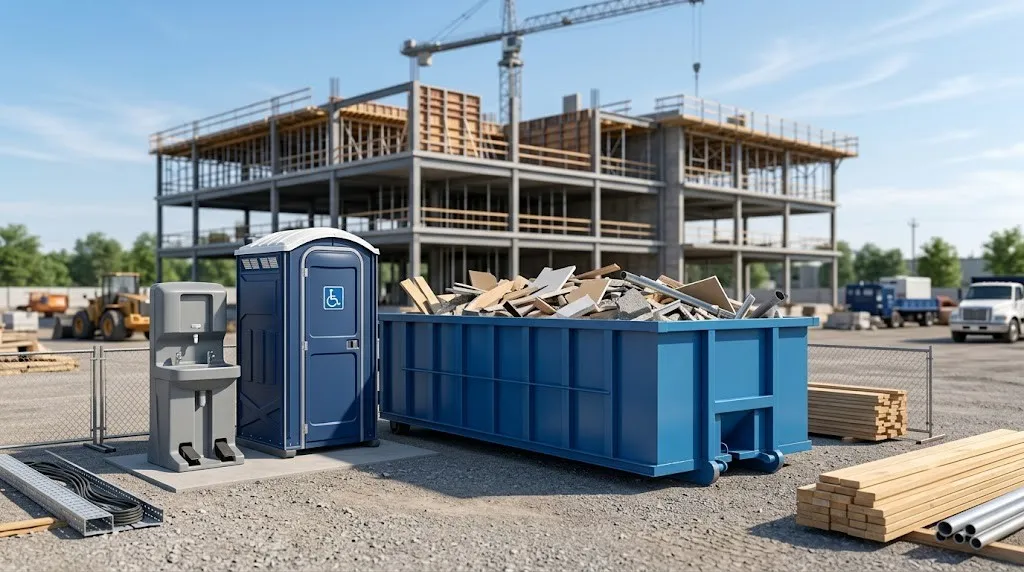
A 10 yard construction dumpster rental is the workhorse for bathroom tear-outs, small additions, deck removal and single-room remodels. It is compact enough for a driveway but still handles a meaningful load of drywall, lumber and shingles. Bigger jobs move up fast: a full kitchen gut, a roof replacement or new-build framing waste usually needs a 20 yard or 30 yard box instead. Review dumpster sizes and dimensions before you order, because guessing small and needing a second haul costs more than sizing up once. For anyone weighing a 20 yard against a 30, 20 yard dumpster rental and 30 yard dumpster rental lay out what each holds. Heavy commercial teardown or a full lot clear usually calls for 40 yard dumpster rental. A roll-off truck needs about 60 feet of straight clearance behind it to set the box down safely, so walk the driveway or alley before delivery day, especially on tighter St. Louis lots near University City, 7.9 miles northwest, where older streets run narrow.
Most construction debris is fair game: wood, drywall, shingles, concrete rubble, metal scrap and packaging. What is not allowed varies by material and by hauler, and getting it wrong can mean a rejected load or an extra charge. Check what cannot go in a dumpster before loading anything questionable, particularly paint, solvents, batteries or anything flagged as hazardous. Weight matters as much as material type. Every roll-off has a rated weight limit, and going over it triggers overage charges that can outpace the base rental cost. Review dumpster weight limits so your crew knows where the ceiling sits before the box fills up. OSHA 1926.25 requires scrap and debris to be cleared from work areas as work proceeds, and OSHA 1926.252 covers how waste gets disposed of, including chutes and enclosures on multi-story jobs. Keeping the dumpster close to the work, without blocking egress or a fire lane, keeps a St. Louis site both compliant and efficient.
Permit rules depend on where the dumpster sits. A container placed entirely on private property, inside a fenced lot or driveway, typically does not trigger the same review as one set in the street or right of way. If the box has to sit at the curb or partly in a public lane, placement needs confirming with the city before delivery, since right-of-way rules are handled at the municipal level and are not something to guess on. See dumpster permit requirements for what to check and who to call. This applies just as much in St. Louis proper as it does in nearby Webster Groves, 8.6 miles southwest, or Kirkwood, 12.5 miles west, where curb rules can differ block by block. Sorting this out before the truck rolls saves a rescheduled delivery. St. Louis Porta Pros can help flag when a site plan likely needs a public-way check versus when it clearly does not.
Beyond the dumpster itself, a construction site often needs more than one rental to run clean. Construction site services covers how dumpsters, fencing, toilets and power pair together on an active job. If the crew count is climbing, OSHA 1926.51(c) sets toilet ratios starting at one facility for 20 workers or fewer, which is worth checking against your headcount using how many porta potties do I need. Sites running saws, generators or temporary power should also check temporary power pole and light tower rental for evening or winter work. For crews needing secure lockup for tools between phases, storage container rental rounds out a typical job site order in St. Louis.
Most rentals run by the day, week or month, and the right length depends on job pace. A quick demo might only need a day or a weekend, while a full renovation often runs a month or longer. Monthly rates work out better than repeated weekly renewals on longer builds.
A 10 yard box usually covers a single bathroom gut, including tile, drywall and an old tub or vanity. Two bathrooms or a bathroom plus flooring tear-out often pushes toward a 20 yard unit. When in doubt, size up rather than risk a second pickup mid-project.
Sometimes, but it depends on the city and the specific block. Right-of-way placement generally needs confirmation with St. Louis before delivery, since curb and lane rules are set locally and vary by neighborhood. Keeping the box on private property avoids that question entirely.
Delivery fees run 100 to 500 dollars a day depending on distance and site access, and this is typically billed apart from the dumpster rate itself. Sites farther out, like St. Peters at 27.0 miles northwest, may sit at the higher end of that range. Ask for the delivery fee up front.
Construction dumpsters are usually rated for heavier, denser debris like concrete, shingles and drywall, while residential boxes lean toward household junk and yard waste. Weight limits and pricing reflect that difference. If your job mixes both, size and weight limit matter more than the label on the container.
Yes. St. Louis Porta Pros delivers construction dumpster rental across St. Louis and the surrounding metro, with same-day and next-day drop-off available on most orders.
Pricing depends on the unit and how long you need it. See our cost breakdown and request a free quote for an exact figure.
Standard rentals include scheduled service — a pump-out, a clean, a restock and fresh deodorizer. Busy or hot-weather sites can be serviced more often.
Call now or request a free quote — clean units, on-time delivery, transparent pricing.