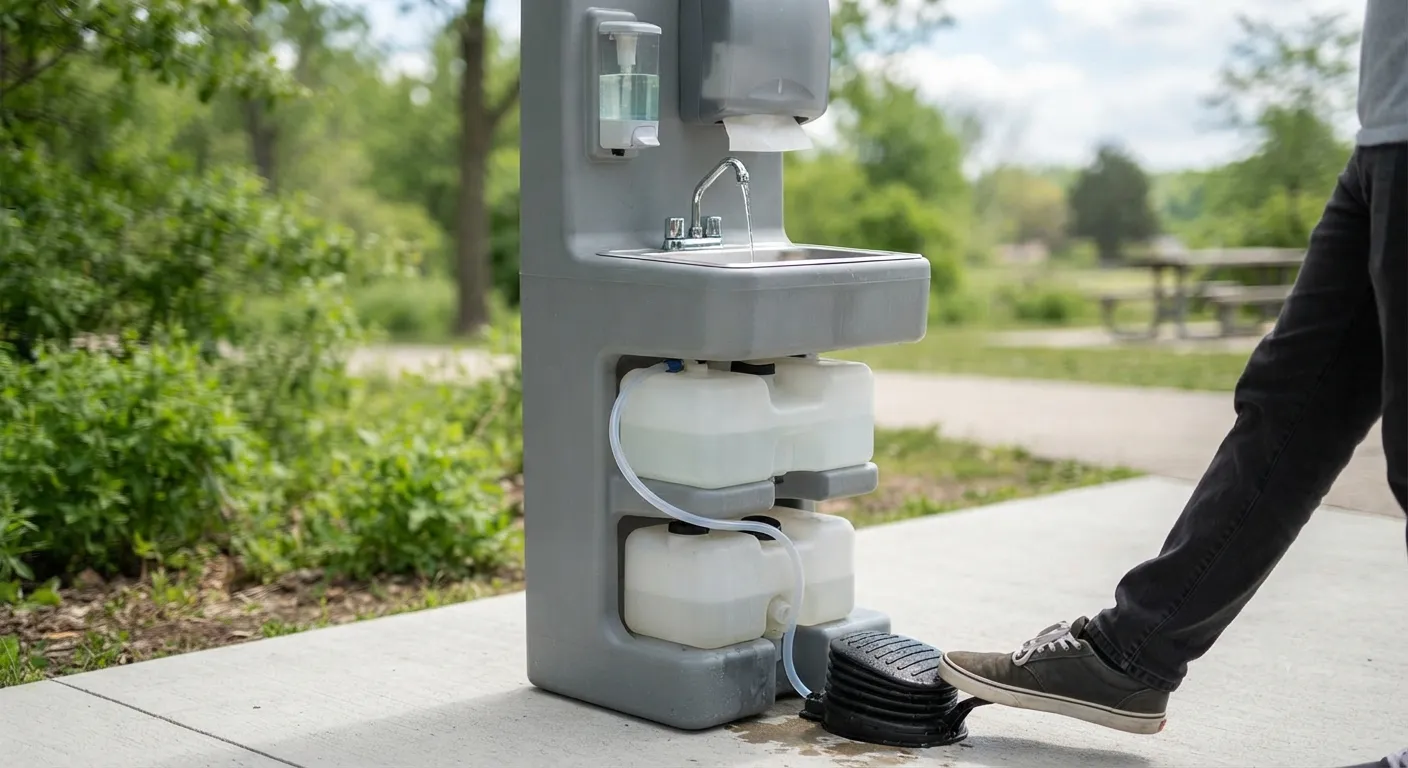
A portable sink rental in St. Louis runs a hand-wash basin with its own fresh water tank, so crews and event guests can wash up without hooking into a building. St. Louis Porta Pros typically pairs one sink station with every 10 to 15 workers on a site, and most jobs pair one sink with every one or two toilets.
A portable sink station is a self-contained basin: fresh water tank on one side, greywater catch tank underneath or behind, soap and towel dispenser mounted on top. No plumbing hookup needed. Some run on a foot pump, some on a small internal pressure pump, and a few offer a hot water portable sink option with a small heating element for wash water. That last feature matters more than people expect once fall hits and porta potty in winter planning starts. St. Louis Porta Pros sets these up at construction sites, weddings, and food booths across St. Louis, usually placed right next to the standard porta potty rental units or worked into a full portable restroom rental package. Under 29 CFR 1910.141(d)(2), washing facilities need soap and a way to dry hands. Hand sanitizer alone does not satisfy that. If your crew is also handling paints, coatings, herbicides, or insecticides, OSHA 1926.51(f)(1) requires washing facilities for that exposure specifically, not just a general sink.
Yes, and it is more common than people think for camping trips, film sets, and disaster relief work. A portable sink to wash hair works best with a model built with a deeper basin and a spray or hose attachment rather than a simple pour spout. Crews on film set restroom rental jobs often request this add-on for talent between takes, and disaster relief sanitation deployments use the same setup when running water is out. For a camping portable sink at a group site or hunting camp, a basic foot-pump model with a 5 to 7 gallon fresh tank covers dishwashing and light hair rinsing for a weekend. If you need real hot water and pressure for hair washing at an event, look at a shower trailer rental instead, since it delivers a proper shower head rather than a basin.
Match sink count to your toilet count and worker headcount, not square footage. OSHA 1926.51(c) sets toilet ratios by crew size: one facility for 20 workers or fewer, then one seat and one urinal per 40 workers up to 200. A reasonable rule of thumb, consistent with ANSI/PSAI Z4.3's baseline service interval for units serving up to 10 users over a 40 hour week, is one sink station per 10 to 15 workers on a construction site. Food vendors and event organizers should lean toward more, since guests wash hands more often than they use the restroom. Check our how many porta potties do I need guide for the full breakdown, and pair sink counts with your ADA accessible porta potty units, since ADA Standards section 213.2 requires at least 5 percent of clustered single-user toilets to be accessible, with a minimum of one.
Place it on level, stable ground near the toilet cluster, within reach of a delivery path, and out of the way of foot traffic. ADA Standards section 302.1 calls for stable, firm, slip-resistant surfaces, which matters even more with a wet station like a sink. Keep at least 36 inches of clear route per ADA Standards section 403.5.1 if the station serves an accessible unit, and mind operable parts: soap dispensers and pumps should need no more than 5 pounds of force per ADA Standards section 309.4. For construction sites, our porta potty placement guide covers clearance for delivery trucks, which generally need about 60 feet of straight room behind the vehicle. Sites near University City, about 7.9 miles northwest of downtown St. Louis, or Webster Groves, 8.6 miles southwest, follow the same placement logic regardless of which side of the city you're on. If you're staging near a public right of way anywhere in St. Louis, confirm placement with the city; that's not something to guess at.
Sink stations are usually quoted alongside a standard toilet rental or bundled into a delivery fee rather than priced completely on their own. Here's how nearby unit pricing runs for reference:
| unit | duration | typical price |
|---|---|---|
| standard | day | $150 |
| standard | week | $200 |
| standard | month | $200 |
| delivery_fee | day | $150 |
| delivery_fee | week | $100 |
A weekend rental for a standard unit typically lands around $250, useful if you're planning a Saturday event and want the sink and toilet delivered together. For full unit and duration pricing, see porta potty rental cost and porta potty rental per day. Longer jobs should check monthly porta potty rental rates, since month-long rentals price out differently than a weekend booking.
Tank sizes vary by model, generally a small fresh tank paired with a matched greywater tank underneath. For heavier-use events, ask about a station with a larger portable sink water tank so refills happen less often during a multi-day booking.
No. Most units run on foot pumps or small internal battery pumps, so no outlet is required. Hot water models may need a battery or minor power source for the heating element; ask when booking through request a quote.
Yes, sink stations rent standalone for food booths, farm work, or handwashing-only compliance needs. See handwashing station rental for standalone options and handwashing requirements for what OSHA expects on site.
Service depends on user count and tank size, similar to the weekly baseline in ANSI/PSAI Z4.3 for toilets. High-traffic events may need daily refills; check how often are porta potties cleaned for our standard service intervals.
Handwashing facilities are required when workers apply paints, coatings, herbicides or insecticides under OSHA 1926.51(f)(1). For general site sanitation planning, see OSHA portable toilet requirements or start from construction site services.
Yes. St. Louis Porta Pros delivers portable sink rental across St. Louis and the surrounding metro, with same-day and next-day drop-off available on most orders.
Pricing depends on the unit and how long you need it. See our cost breakdown and request a free quote for an exact figure.
Standard rentals include scheduled service — a pump-out, a clean, a restock and fresh deodorizer. Busy or hot-weather sites can be serviced more often.
Call now or request a free quote — clean units, on-time delivery, transparent pricing.